KNOW-HOWS of sorting and processing of dispersed materials
Separation of abrasive powders:
* Dry separation of powders on narrow ranged fractions with excess of the
requirements of the present standards
* Effective exception of a coarse fraction
* Improvement of the quality of clean-off processing of surfaces
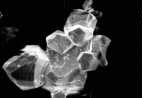
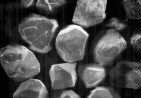
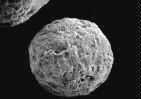
Ovalization of abrasives:
* Increase of the contents of isometric particles up to 95-100 %
* Rejection of defective particles
* Increase of durability of fixation of the particles in the abrasive tools
* Improvement of the quality of a polishing surfaces
* Increase of mean durability of a abrasive particles
Mechano-activation of materials for preparation of
hard-alloy and diamond tools:
* Temperature fall of a sintering of a detail
* Increase of resource, durability and efficiency of the tools
Preparation of materials for a powder metallurgy:
* Considerable increase of bulk weight
* Increase of afterflow
* Increase of durability of the details
Grinding of ceramic and crystalline
materials and glasses:
* High yield (up to 75 %) of fractions of the demanded size without superfluous
mill
* Minimum rub of construction materials
|
Initial |
Desaggregated |
Ovalizated |
||
| Tungsten
1 cm = 7 mkm |
____ 1?? |
|
|
|
|---|---|---|---|---|
| Corundum
1 cm = 100 mkm |
 |
 |
 |
|
| Stainless steel
1 cm = 400 mkm |
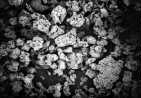 |
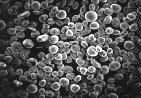 |
||
| Titanium
1 cm = 50 mkm |
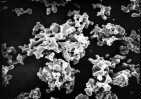 |
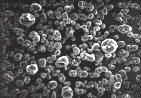 |
||
|
|
|